.png)
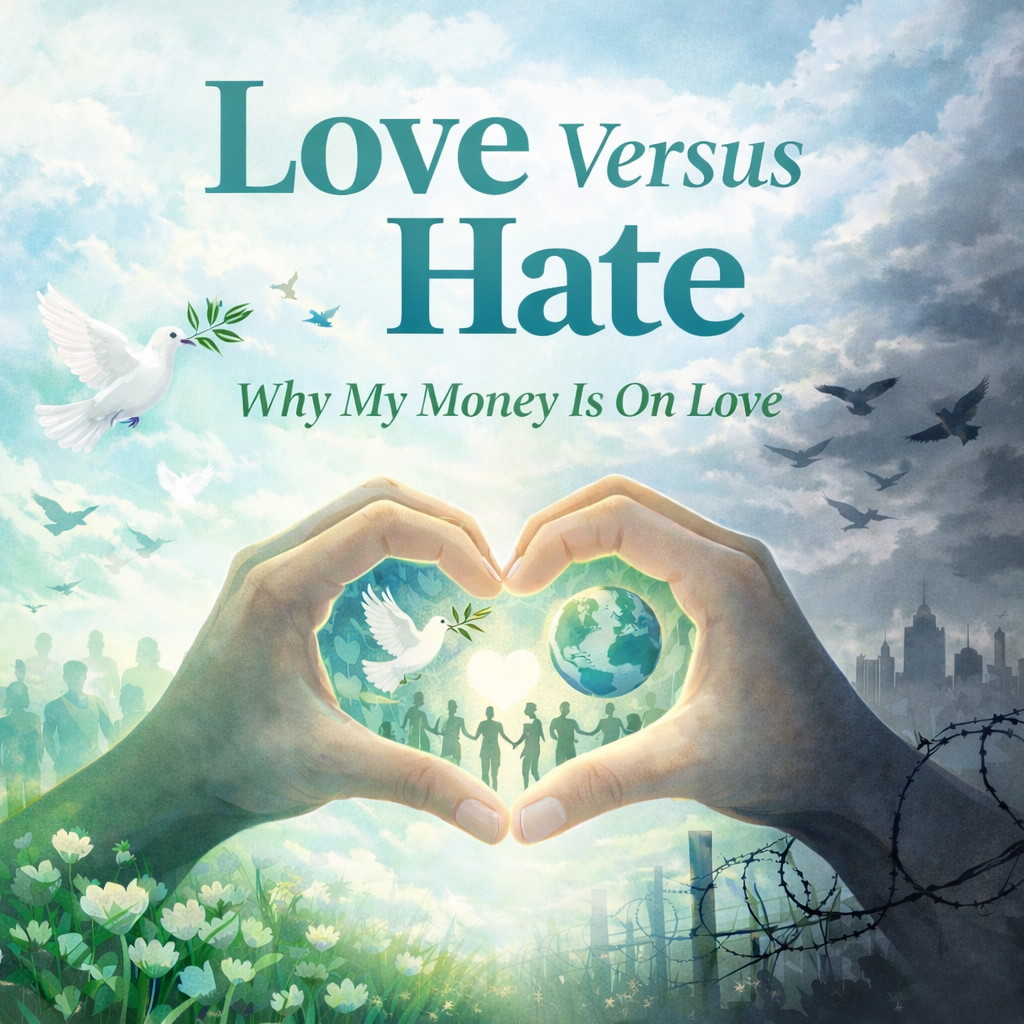


II’ll admit it — I was ambivalent about the 2026 Super Bowl halftime show.
There was a lot of hype about Bad Bunny, an artist I knew very little about. And if I’m honest, there’s always a lot of hype around the Super Bowl. Aside from the Clydesdale commercials, very little tends to live up to the billing.
So I watched more out of curiosity than anticipation. What I saw surprised me.
The performance was joyful and exuberant. The dancing was electric. The colors and costumes were vibrant. Even with my limited understanding of Puerto Rico’s history, I could feel deeper themes woven through the music and choreography.
But it was the finale that won me over.
The message flashed across the Jumbotron.
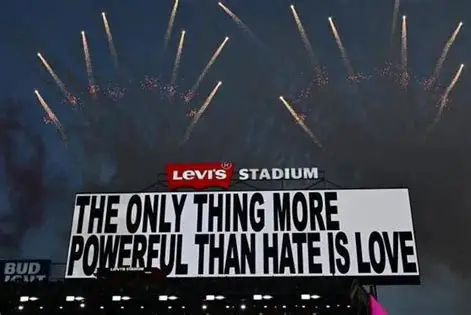
Then came the flip of the football, the flags of the Americas filling the stadium, and the words on the football: “Together We Are America.”
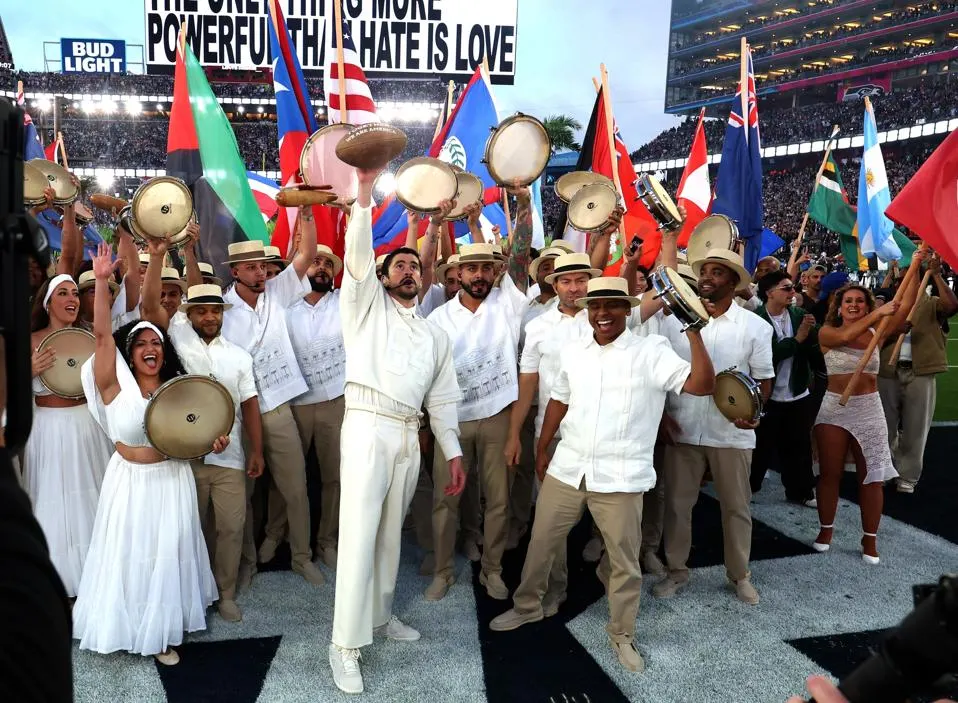
I felt chills — and something else. Hope.
________________________________________
A Masterclass in Cultural Storytelling
Curiosity got the better of me. My Spanish is limited, so I began reading more about the performance and about Bad Bunny himself.
As Forbes described it, the halftime show was a masterclass in cultural storytelling. Every detail carried meaning rooted in Puerto Rican history, identity, and resistance.
He didn’t just bring Puerto Rican culture to the Super Bowl. He brought an entire neighborhood — its struggles, its music, its food, its faith, its history, its joy.
Every element was deliberate:
• The jíbaros honored agricultural workers.
• The panderos and cuatros celebrated musical heritage.
• The casita recreated community.
• A real wedding embodied love.
• Power lines symbolized colonial neglect.
• A young boy receiving a Grammy represented hope for the next generation.
And the closing message rejected a false choice: that one must choose between being Puerto Rican or American.
In thirteen tightly choreographed minutes, he delivered a history lesson, a political statement, a cultural celebration — and a party.
I encourage you to read more about the symbolism embedded in that performance. You may, like me, walk away with a deeper admiration — not just for the artistry, but for the message.
It was a message of love, culture, family, dignity, and togetherness.
And we need that message right now.
________________________________________
The only thing more powerful than hate is love.
Unfortunately, in Western culture, love is often misunderstood.
We define it as passive rather than active.
As romantic rather than universal.
As something that happens to us rather than something we intentionally practice.
In All About Love, bell hooks reframes love as an active choice — a practice aimed at nurturing one’s own or another’s spiritual growth. Love is not merely a feeling; it is a conscious decision and deliberate action.
She describes love as a combination of care, affection, recognition, respect, commitment, trust, and honest communication.
Love is a force. It is an energy. A presence. A choice.
We know it when we experience it — and we are changed by it.
________________________________________
In just the past few weeks, I have witnessed powerful examples of love in motion.
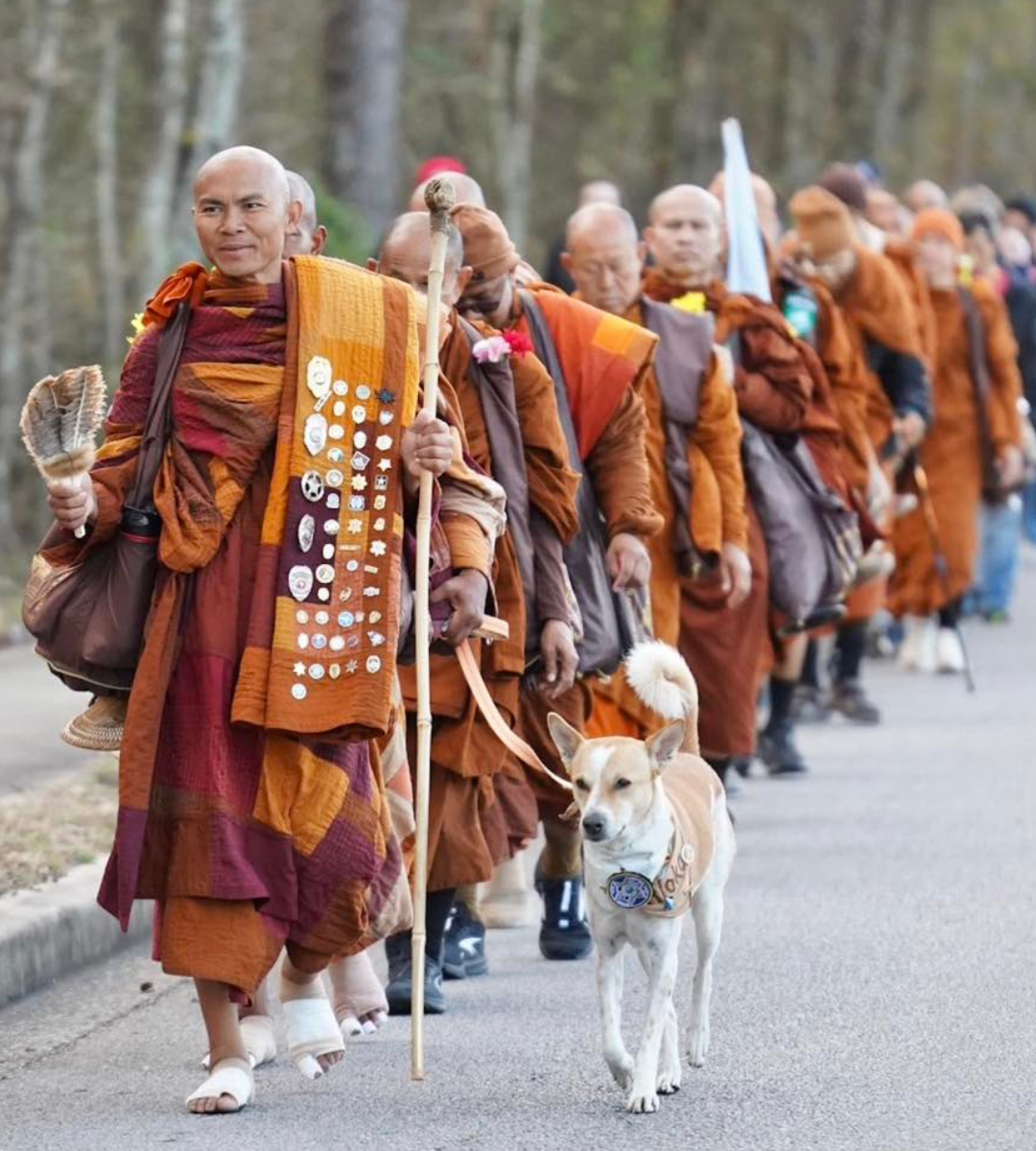
Nineteen Buddhist monks completed a 2,370-mile Walk for Peacev from Texas to Washington, DC, over 108 days.
Their journey was not loud or confrontational. It was steady. Disciplined. Embodied.
Each mile became a moving meditation — a prayer carried across highways, small towns, and city streets.
People who encountered them often spoke of feeling unexpectedly moved. As if the quiet persistence of their presence reminded them that peace is not passive. It is practiced.
In a divided and restless time, their walk demonstrated that love can travel long distances. It can endure heat, fatigue, and uncertainty.
And when carried collectively, it becomes contagious.
________________________________________
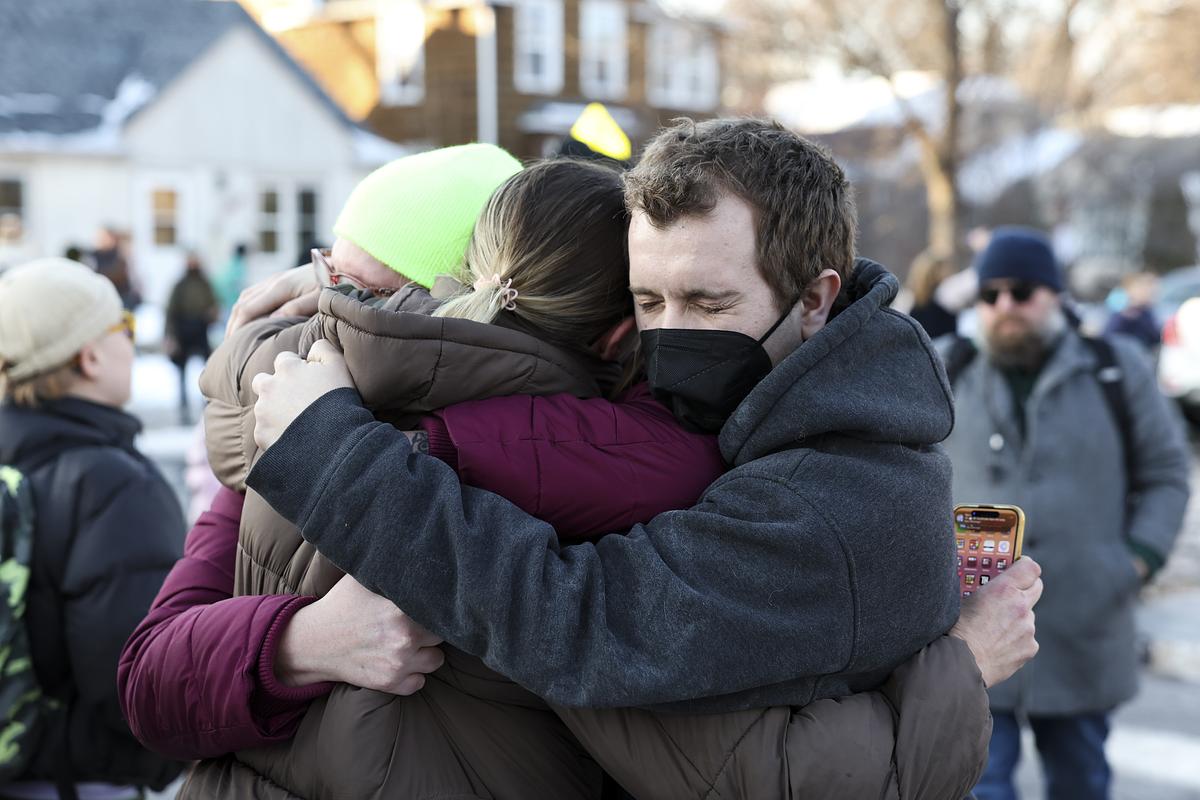
Recently in Minneapolis, love showed up not as sentiment, but as solidarity.
When concerns arose about immigration enforcement in local neighborhoods, residents gathered. They stood physically and morally beside their immigrant neighbors. They shared information, formed rapid-response networks, documented activity, and created visible circles of protection.
They sent a clear message:
No one in our community stands alone.
This was love expressed as courage.
Not loud. Not violent. But embodied.
In a climate where immigrants are often made to feel disposable or unsafe, neighbors affirmed dignity through presence.
When practiced publicly, love becomes protection. It becomes belonging. It becomes power.
________________________________________
There is ample evidence — historical and present-day — that love is one of our highest energetic states. It lifts others. It brings light. It creates lasting change.
Hate, by contrast, relies on force.
Force may compel behavior for a time. But it rarely transforms hearts. And without transformation, change does not last.
We have all seen the playground bully appear powerful — until someone stands up to them.
History tells the same story.
We, as a culture, continue to remember and revere the words of great visionaries that demonstrated, despite personal hardships, the power of love and non-violence. Their love in action toppled slavery, apartheid, and inhumane situations. We remember, revere, and role model ourselves from people like:
Martin Luther King, who confronted racial segregation and systemic oppression through nonviolence rooted in Christian agape love. He believed that love was not sentimental, but a force for social change. He called love the “only force capable of transforming an enemy into a friend.”
Mahatma Ghandi dismantled British colonial rule and caste discrimination through Satyagraha, “truth-force grounded in non-violence and love. He taught us that love expressed through disciplined nonviolence could dismantle oppression without dehumanizing the oppressor.
Jane Adams who tackled urban poverty, inequality, and social fragmentation through community-centered compassion, creating spaces of dignity, eduction, and care for immigrants and the poor.
These leaders teach us:
• Love is not weakness — it is courageous moral clarity.
• Nonviolence requires strength and discipline.
• Lasting change transforms consciousness, not just policy.
• The goal is not defeat, but restored human dignity.
________________________________________
I hope you have experienced love in its many forms — from those close to you, and perhaps from strangers.
But even more, I hope we choose it.
Choose to reach out.
Choose to honor dignity.
Choose to ask and give.
Choose to stand with our families — nuclear and global.
Choose to love neighbors down the street and across the world.
Not because it is sentimental. But because it is powerful.
Because it works. Because it endures.
As that halftime message reminded us, we are more connected than we think.
Hate divides loudly. Love builds quietly — and lasts.
And in the end, history does not remember those who shouted the loudest.
It remembers those who loved bravely enough to change the world.
You're invited to subscribe to Ripples a soulful weekly newsletter crafted to nourish your inner knowing and spark meaningful insights. Each issue includes a short musing, reflection questions, and handpicked resources for your journey. If you're ready to reconnect, reflect, and rise in community with other spirit-led women, join us—and let the ripples begin.
Join my Ripples Newsletter
Exploring the places that tend to silence us: the Patriarchy at Work, at Home, at the Doctor’s Office, at the Gym, at Church or at the Car Dealership.
Read this musing
It’s been a hell of a day. I’m finally seventy miles in the air on a flight to D.C., then on to Indy — finally being the keyword.I’d spent the day in Savannah, Georgia, wrapping up a client’s strategic retreat. The plan was simple: finish by 4:30, get to the airport, and two-hop home to Indy by midnight. That was the plan — until it wasn’t.
Read this musing
It’s Monday morning. 7 a.m. I sit at the kitchen table, gazing out at the dawn. It’s not quite light, but no longer dark. This in-between moment holds both the arrival of light and the retreat of night. And later, as the day dims into dusk, the cycle will reverse. This liminal time feels like a perfect metaphor for the emotions surrounding me lately. A reminder that opposites often co-exist — joy and despair, hope and fear, sadness and light. One woven into the other. One fades so the other may rise.
Read this musing
Receive weekly insights from my years of lived experience as a creative, entrepreneurial woman stepping into my gifts and passions.
Join my Ripples Newsletter