.png)



Over a coffee (or tea, in my case) with a well-intentioned new acquaintance, the inevitable question came up—the one I had come to dread, the one that always left me unnerved because I didn’t have a perfect answer.
I saw it coming. I steeled myself. My mind raced for a plausible response. The little voice in my head became a BIG voice screaming, “Why don’t you know this, you big dummy?”
The question itself was simple, understandable, and—ironically—one I often ask others:
“As one of the co-founders of Apeiron, where do you see it in five years?
What’s the plan?”
The question assumes perfect clarity—a well-defined path, a ten-step approach, and a neat set of metrics related to revenue, profit, or size.
The truth is: I don’t. I simply don’t know (gasp).
What I do have is a shared vision of what we might create together, faith in our mission, and a solid belief in our core values. While I can’t cite numbers, dollars, or milestones, I know we’ll continue to co-create and iterate our way into the future.
Which is a very fancy way of saying: “I don’t know.”
And this scares people—including me. In a complex, fast-moving world, more and more things fall into the category of unknowable. Some of that is ignorance, sure. But much of it is simply that uncertainty is a feature of the world, not a flaw.
Admitting publicly—or even privately—that you don’t know something can feel shameful. We tell ourselves we should know. We assume other competent people do know. We fear others might think less of us.
Publicly admitting “not knowing” is an act of vulnerability. It means giving up the pretense of being all-knowing. It can feel like confessing to being “less than.”
But here’s the twist: that vulnerability opens the door to greater connection, learning, and possibility. I’ve taught the power of “not knowing” for years as part of building trust. It’s counterintuitive, I know.
Below are three ways that “not knowing” can become an advantage.
When I teach how to build trusted consulting relationships, there’s always a moment of shock when I say that telling a client “I don’t know” actually increases trust.
And invariably, people try it—and come back amazed that it’s true.
If you are vulnerable enough to admit what you don’t know, then others can trust that when you do say you know something, you really do.
Contrast this with those who puff out their chests and pretend they know everything—even when it’s obvious they don’t. That’s the classic low-trust move.
Of course, there’s a caveat: “not knowing” must be followed by exploration. By doing your homework. By discovering what can be known, identifying what cannot be known, and clarifying what remains uncertain.
The theme of not knowing resurfaced as I read Sapiens: A Brief History of Humankind by Yuval Noah Harari (don’t be fooled by the word brief—it’s 428 pages). Harari argues that Europe’s comfort with “not knowing,” and the curiosity that came with it, fueled their ability to create a far-reaching global empire—despite having fewer people, fewer resources, and smaller armies than other civilizations.
They explored vast unknown territories with archaeologists, botanists, zoologists, and anthropologists in tow. They came, they conquered, they studied, they learned. While I don’t condone the colonial mindset, I can admire the willingness to step into the unknown.
Science itself is rooted in “not knowing.” We hypothesize, experiment, test, fail, and test again—learning a little more each time. Sometimes all we learn is how much we still don’t know. Yet, through diligence and rigor, breakthroughs emerge. Diseases are cured. Humans walk on the moon. All because we had the courage to admit ignorance—and the audacity to find out anyway.
Shifting into curiosity elevates our thinking. Instead of swirling in frustration about a difficult colleague, we can ask, “What might shift the way we interact?” Instead of freezing in front of an intractable problem, we can ask, “What’s one small thing we could try to make this better?”
And when someone asks about your future? Try:
“I may not know exactly, but I’m excited to see what unfolds.”
In times of uncertainty, we naturally gravitate toward people who claim to know the way, have the answers, and promise things will get better.
The idea that leaders may “not know” can feel unsettling.
We can choose to follow those who, with false bravado, insist they have all the answers…
Or we can choose to follow those who tell the truth—and inspire us to rise to our highest selves.
Because the plain truth is: we don’t always know. No one does.
And the bigger the challenge, the newer the territory, the more ambitious the vision—the less we know going in.
So instead of expecting ourselves or others to have the answers, maybe we should trust those who are relentless in finding a way. Those who ask good questions, remain curious, study situations from multiple angles, experiment, learn quickly, and adapt.
“Not knowing” does not mean “cannot know.”
It means choosing curiosity, which leads to discovery.
And discovery almost always reveals how much more there still is to learn.
And the cycle continues.
I’ve made peace with that inevitable question I used to dread. When asked about plans, metrics, or my life five years out, I can now answer truthfully:
And every one of those answers is true.
You're invited to subscribe to Ripples a soulful weekly newsletter crafted to nourish your inner knowing and spark meaningful insights. Each issue includes a short musing, reflection questions, and handpicked resources for your journey. If you're ready to reconnect, reflect, and rise in community with other spirit-led women, join us—and let the ripples begin.
Join my Ripples Newsletter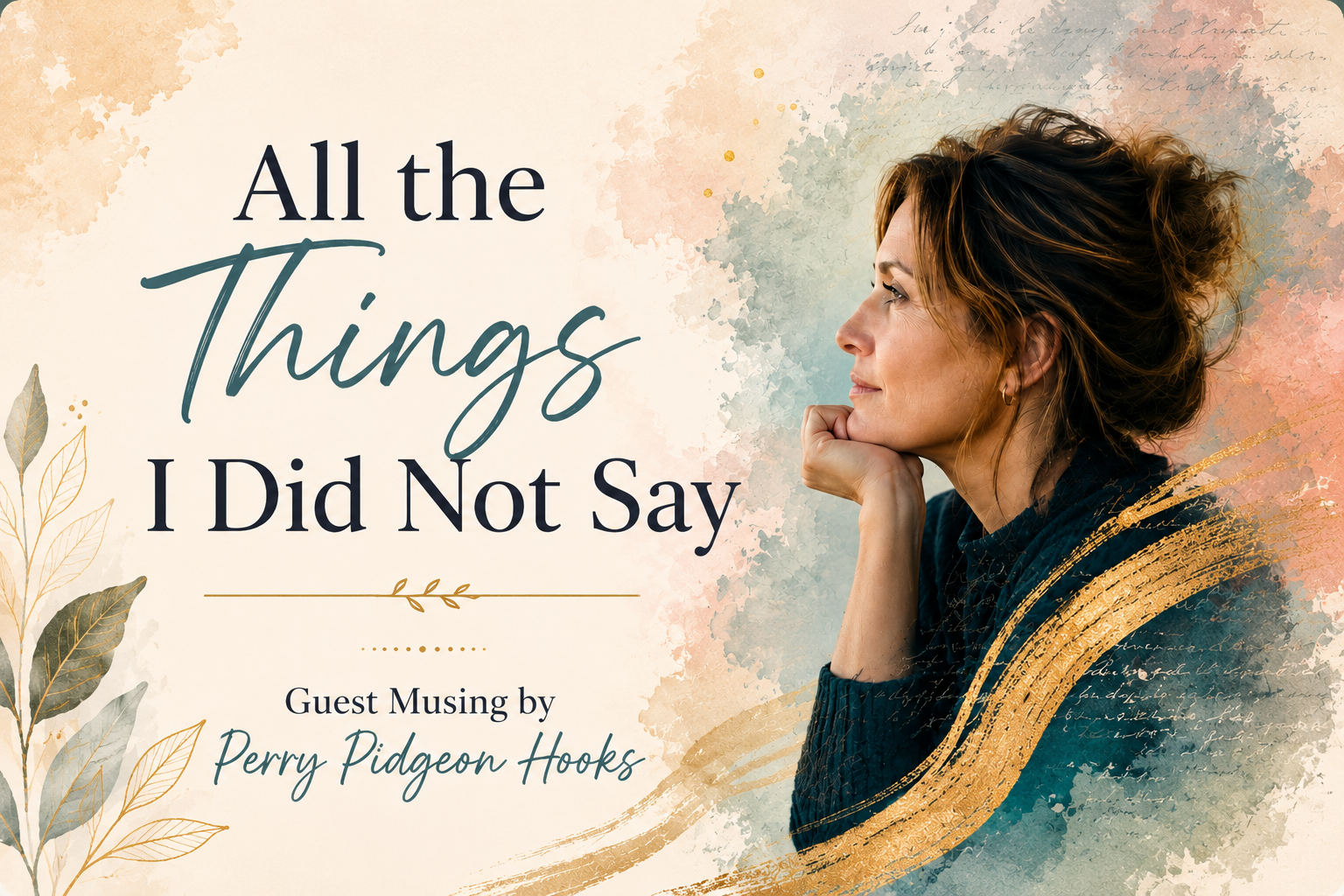
Exploring the places that tend to silence us: the Patriarchy at Work, at Home, at the Doctor’s Office, at the Gym, at Church or at the Car Dealership.
Read this musing
It’s been a hell of a day. I’m finally seventy miles in the air on a flight to D.C., then on to Indy — finally being the keyword.I’d spent the day in Savannah, Georgia, wrapping up a client’s strategic retreat. The plan was simple: finish by 4:30, get to the airport, and two-hop home to Indy by midnight. That was the plan — until it wasn’t.
Read this musing
Discover the hidden cost of “sacrifice syndrome” — the pattern of giving endlessly while neglecting yourself. Learn how renewal restores clarity, joy, and sustainable service.
Read this musing
Receive weekly insights from my years of lived experience as a creative, entrepreneurial woman stepping into my gifts and passions.
Join my Ripples Newsletter