.png)
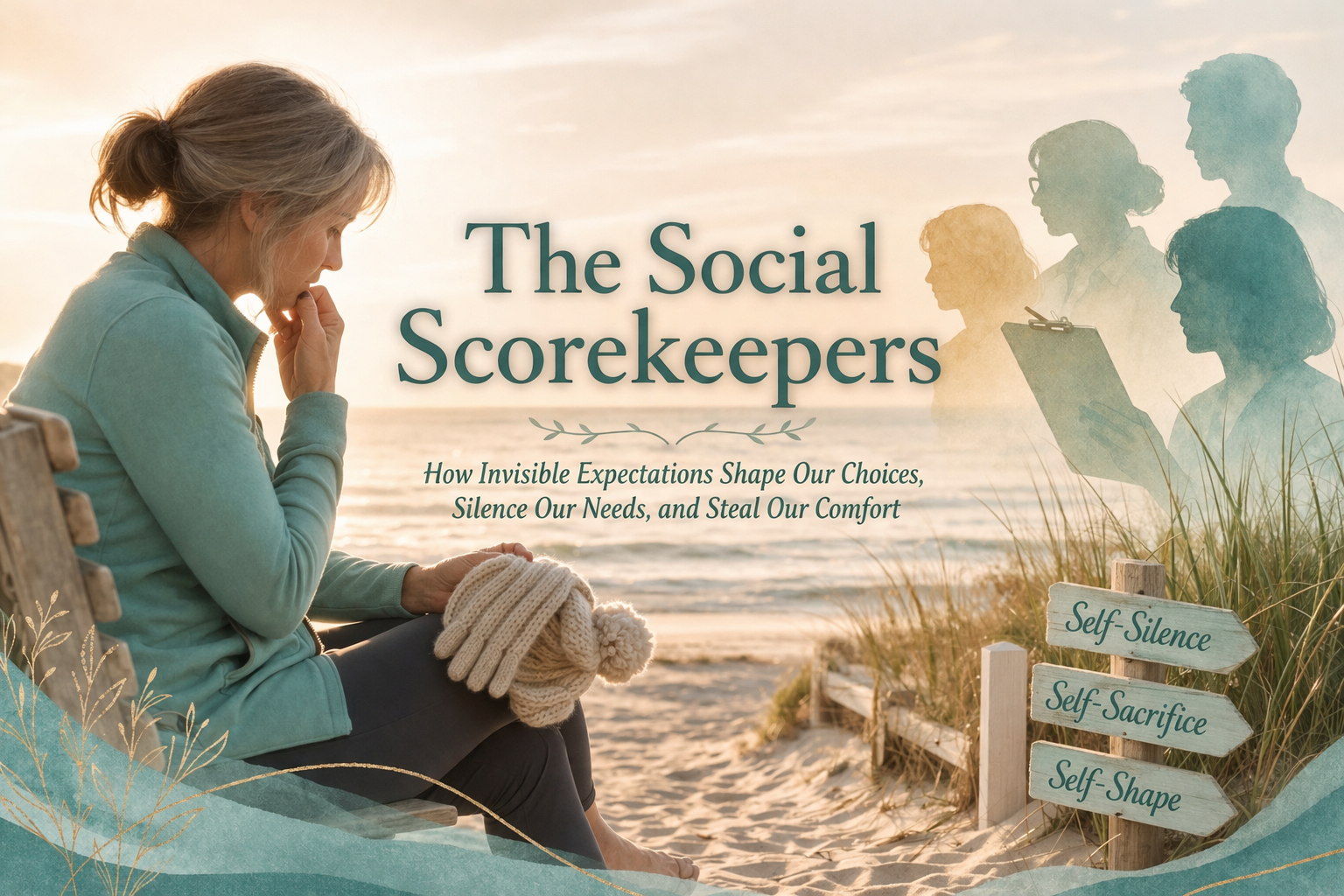


It was Saint Patrick’s Day, March 17, when record cold temperatures were being recorded all along the eastern United States. On that afternoon, a simple walk led me to a powerful insight: the conversation I was having with myself was quietly undermining my agency.
Our neighborhood was sheltered and sunny. The temperature was in the mid-50s—not bad at all. Yet as I turned down the second street on my path, I realized I was cold. Even though my hat and gloves were right there in my pocket, I chose not to put them on.
Ten minutes later, I noticed it again—I was still cold. Only then did I become aware of the conversation happening in my head about whether I should put them on. It went something like this:
“It’s 57 degrees. That’s not cold enough to need a hat and gloves. You’re being a wimp. You can’t be that cold.
Others would think it’s ridiculous—you, walking around in a hat and gloves when it’s sunny and 57 degrees, like it’s freezing out.”
And there it was.I was allowing a vague, invisible group of “others” to keep me in discomfort—rather than simply put on my hat and gloves, stay warm, and enjoy my walk.
But who were these “others”?
There were no nosy neighbors peering out their windows, judging my resilience. No other walkers in shorts and T-shirts to compare myself to. The golfers I passed were far too engrossed in their game to care about my clothing choices.
And yet—their imagined judgment held power.
________________________________________
Since then, I’ve been paying attention to how often that voice speaks—and how often it guides my behavior.
The hard truth? It’s far too often a Chatty Cathy combined with the mean girls of junior high.
As I reflected on why I resisted something as simple as putting on a hat and gloves, several things became clear.
I talk to myself in ways I would never speak to a friend—let alone someone I love. My self-talk is far more focused on flaws than on what is already whole, capable, or even wonderful.
And the most striking realization of all: My inner voice—beyond being judgmental—is constantly asking,
“What will others think?”
________________________________________
I can trace this pattern back to my upbringing.
As a young girl, I was taught to mind my manners, dress appropriately, speak respectfully—and always have clean underwear (in case I was in an accident).
There always seemed to be some vague, shadowy figures—social scorekeepers—watching, evaluating, and quietly judging my words, actions, appearance, and even my hygiene.
To the point of absurdity: that someone coming to my aid in an emergency would somehow be noting the condition of my undergarments.
These “others” included parents, neighbors, teachers, and religious leaders. Some were real. But beyond them, there was always this undefined audience—hovering, watching, waiting for me to slip outside the lines.
And so, compliance became ingrained. Unwritten rules about how to dress, groom, speak, and behave weren’t just taught—they were internalized.
And, as a young girl, many of those norms were rooted in:
• Conformity
• Compliance
• And knowing my place—often in relation to boys and men
________________________________________
As simple as my hat-and-glove story is, it carries echoes of this conditioning:
• I ignore my body and deny what I feel—I’m cold, but I dismiss it.
• I convince myself to “tough it out,” equating discomfort with strength.
• I prioritize what I imagine is acceptable to others over what is true for me.
________________________________________
From an early age, I learned to anticipate these social scorekeepers—and to regulate myself accordingly.
Right or wrong. Logical or not. Significant or trivial.
I allowed them to live in my head.
And when they do, something important happens:
My self-talk becomes internalized surveillance. No one is watching. And yet—I behave as if they are.
________________________________________
These social scorekeepers are especially skilled at encouraging three patterns:
I deny my truth. I don’t say what’s real—especially if it might disrupt or differ.
I convince myself I don’t need anything. I minimize my needs rather than risk judgment.
I mold myself to fit expectations—both real and imagined—regardless of whether they are valid, true, or meaningful.
________________________________________
Over time, I’ve come to realize—and at times, lament—how little others are actually paying attention. Most people are far too absorbed in their own lives to notice ours in any sustained way.
This is a blessing when I replay a mistake for weeks that someone else noticed for mere seconds.
And it is a curse when we want to be seen, to make an impact, or to let our gifts shine.
________________________________________
So the real question becomes:
If I know this—why do I still hold back? Why do I still shape my behavior to please or appease these imagined scorekeepers?
________________________________________
I know I will always have a certain level of mental chatter—my “monkey mind.”
But the deeper question is this:
Whose voice gets to lead?
Will it be the voices of the social scorekeepers?
Or my own?
Because when I recognize these unseen overseers for what they truly are—artifacts of a system that no longer serves me—I can loosen their grip.
I can let them go.
And in that moment, something shifts.
I reclaim my agency.
I reclaim my voice.
And yes—
I put on my hat and gloves.
Warmly. Freely.
And with just a bit of a flourish.
You're invited to subscribe to Ripples a soulful weekly newsletter crafted to nourish your inner knowing and spark meaningful insights. Each issue includes a short musing, reflection questions, and handpicked resources for your journey. If you're ready to reconnect, reflect, and rise in community with other spirit-led women, join us—and let the ripples begin.
Join my Ripples Newsletter
It’s been a hell of a day. I’m finally seventy miles in the air on a flight to D.C., then on to Indy — finally being the keyword.I’d spent the day in Savannah, Georgia, wrapping up a client’s strategic retreat. The plan was simple: finish by 4:30, get to the airport, and two-hop home to Indy by midnight. That was the plan — until it wasn’t.
Read this musing
Discover the hidden cost of “sacrifice syndrome” — the pattern of giving endlessly while neglecting yourself. Learn how renewal restores clarity, joy, and sustainable service.
Read this musing
As humans, we do these three things: We make up “stories” or versions of our truth using only our viewpoint and with limited and biased data. We assume our stories are factual, that we are right. We craft stories that put us in the best possible light. The stories don't always serve us - here is how to know!
Read this musing
Receive weekly insights from my years of lived experience as a creative, entrepreneurial woman stepping into my gifts and passions.
Join my Ripples Newsletter