.png)
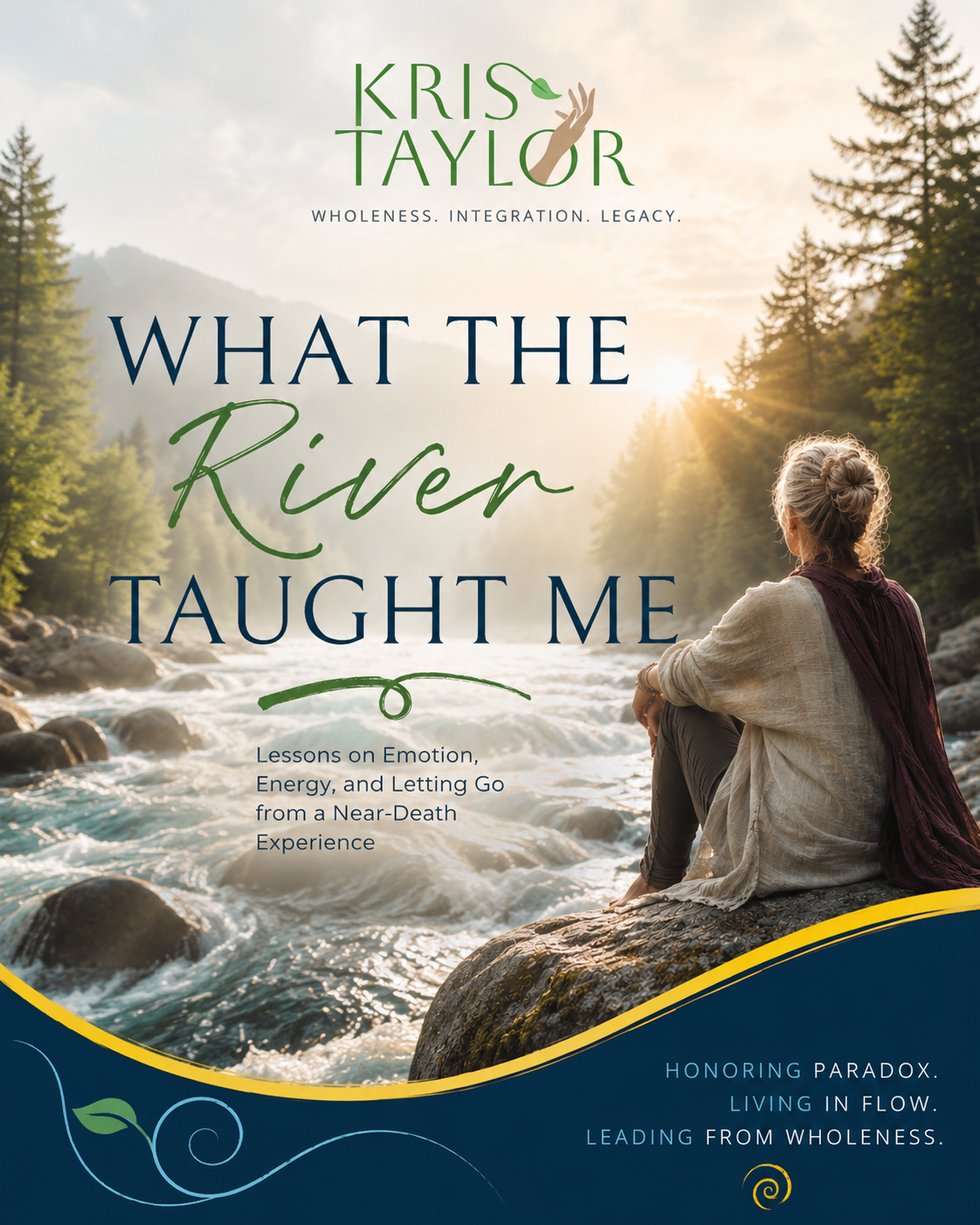


It was a bright early-summer morning, the kind that awakens you to good things. I set out for an outdoor adventure with my new husband, Dan, and my brother and sister-in-law, Rich and Lynn. We were buoyant and carefree—exactly as you would expect at the start of a day like that. I had no idea we were heading into the closest thing I have ever had to a near-death experience.
Our destination was the Youghiogheny River, a powerful tributary of the Monongahela River known for its Class III and IV rapids. This was back when rules were looser and oversight was minimal. We met our outfitter at a roadside pullout. He handed us a raft, paddles, helmets, and life vests, gave a few hurried instructions, and sent us on our way. Rich and Lynn had gone whitewater rafting once before; Dan and I had never gone at all. Still, the current carried us easily, and for a while, it felt almost effortless.
The first rapids hit fast—a chaotic rush of water and rock—but we made it through exhilarated, soaked, and intact. The second was different. Longer. Stronger. Unforgiving.
The raft ricocheted between boulders, spinning wildly as if we were leaves caught in a whirlwind. Then we slammed full force into a massive rock. The impact threw me from the raft and into the churning water.
What followed was pure terror.
The river dragged me under, then hurled me back up just long enough to gasp before pulling me down again. I was swept downstream at brutal speed, my body crashing repeatedly against jagged rocks. Then, just as suddenly, the river released me—spitting me into a quiet pool downstream.
I surfaced battered, bruised, and gasping for air. Somehow, nothing was broken. But something deeper had been shaken in a way I would not fully understand until much later.
There were many lessons that day, including vowing never to whitewater raft again. (Although years later, I did agree to go once more—with an experienced guide in the boat who was promised a very large tip if he kept me inside it.)
Yet one lesson from the rapids did not become clear to me until thirty years later.
I cannot think of another time in my life when I experienced such an intense rush of emotions in such a short span of time. Within mere minutes, I felt startled, frightened, confused, panicked, anxious, and hopeless. Yet alongside the fear was something equally powerful: a fierce will to survive.
Afterward came relief, disbelief, and release. I cried—not from the cuts and bruises, but from the realization that I had survived something that could easily have ended very differently.
Most of us may never experience that many emotions with that much intensity in such a compressed moment. Yet all of us experience emotion. Some emotions energize us; others unsettle us. Some people chase emotional intensity, while others spend their lives trying to avoid it.
That is why some people emerge from whitewater rapids exhilarated and eager to go again, while others—like me—develop a deep aversion to repeating the experience.
Over time, I began thinking differently about emotion.
Neuroscience increasingly suggests that emotions are not fixed states that simply happen to us. They are dynamic experiences shaped by perception, memory, and meaning. But the most useful explanation I have encountered came not from science, but from a leadership coach who described emotions as energy moving through the body.
Sometimes that energy is high-voltage. Sometimes it is low and steady. But emotions are rarely static. They move.
That idea changed something for me.
If emotion is energy, then we can learn neither to suppress it nor be ruled by it. Instead, we can allow it to move through us.
When emotion surges, we can pause. We can notice it. Name it. Breathe through it rather than immediately react to it.
That pause matters.
Neurologically, even a brief pause helps shift us from the reactive limbic system into the prefrontal cortex—the part of the brain associated with reasoning, reflection, and conscious choice. Or, as my coach liked to say, we can learn to “ride the dragon of our feelings” instead of being consumed by them.
Without that awareness, many of us fall into familiar traps.
Some people believe emotions excuse behavior:
“I was so angry I could not help myself.”
Others avoid emotions altogether, treating vulnerability as weakness. They approach life with a “stuff it down—don’t let it out” mentality. But suppression extracts a cost, often a steep one.
Still others blame others for their emotional reactions:
“You made me feel this way.”
In each case, emotions become something happening to us rather than energy moving through us.
Viewing emotions as energy offers another path. We can:
Allow emotions to move through us without becoming captive to them
Ride out difficult emotions without suppressing or exploding
Harness emotional energy thoughtfully rather than reflexively
Recover more intentionally after emotional highs and lows
Recently, we toured homes for sale along the Catawba River near Charlotte. One house especially captivated us. The neighborhood was peaceful—tree-lined streets, quiet water, beautiful homes tucked along the riverbank.
The house itself sat thirty-six feet above the river.
Yet when we stepped inside, the devastation was shocking.
In September 2024, Hurricane Helene unleashed torrential rains across North Carolina. Reservoirs feeding this branch of the Catawba swelled beyond capacity. Rather than gradually releasing water downstream, the dams were opened in a massive emergency release when failure became imminent. The resulting floodwaters surged through the river basin with catastrophic force.
Even this elevated home had been overtaken.
Standing inside that damaged house, I could not help thinking about emotion.
Water held behind a dam becomes enormously powerful when finally released. Emotions work much the same way.
Many of us hold feelings in for years—grief, anger, fear, disappointment, resentment—until eventually the pressure becomes too great. Then the emotional flood comes all at once, often in ways that damage ourselves and others.
But there are other possibilities.
We can allow emotional energy to move through us as it arises rather than storing it indefinitely. We can also channel that energy into something constructive.
We can:
* Process emotion through writing, poetry, journaling, or art
* Move emotional energy physically through running, dancing, hiking, or exercise
* Transform emotional energy into productive action
* Address root causes by having difficult conversations, setting boundaries, or confronting injustice
Energy does not disappear. It moves. The question is whether we move with it consciously.
Treating Emotion as EnergyWhat if, instead of managing emotion, we learned to honor it?
What if we paused long enough to notice the emotional charge moving through us and chose consciously what to do with it?
We might let it pass through us without resistance. We might channel it into creativity, movement, truth-telling, or change.
Either way, we shift from reaction to reflection, from suppression to flow.
The idea of emotion as energy resonates deeply with me because, like many women, I was taught to manage my emotions rather than trust them.
Do not be too loud.
Do not be too angry.
Do not cry in front of others.
Do not be too much.
Managing emotions often becomes an attempt to control, tame, or diminish them. But perhaps emotions were never meant to be tightly managed at all.
Perhaps they were meant to move like rivers—sometimes calm, sometimes fierce, sometimes overflowing their banks—but always flowing toward something larger.
When we stop fearing emotion, we stop fearing ourselves.
You're invited to subscribe to Ripples a soulful weekly newsletter crafted to nourish your inner knowing and spark meaningful insights. Each issue includes a short musing, reflection questions, and handpicked resources for your journey. If you're ready to reconnect, reflect, and rise in community with other spirit-led women, join us—and let the ripples begin.
Join my Ripples Newsletter
Exploring the places that tend to silence us: the Patriarchy at Work, at Home, at the Doctor’s Office, at the Gym, at Church or at the Car Dealership.
Read this musing
It’s been a hell of a day. I’m finally seventy miles in the air on a flight to D.C., then on to Indy — finally being the keyword.I’d spent the day in Savannah, Georgia, wrapping up a client’s strategic retreat. The plan was simple: finish by 4:30, get to the airport, and two-hop home to Indy by midnight. That was the plan — until it wasn’t.
Read this musing
Discover the hidden cost of “sacrifice syndrome” — the pattern of giving endlessly while neglecting yourself. Learn how renewal restores clarity, joy, and sustainable service.
Read this musing
Receive weekly insights from my years of lived experience as a creative, entrepreneurial woman stepping into my gifts and passions.
Join my Ripples Newsletter